Researchers will share $1.2 million in grants from NIH
The National Institutes of Health has awarded UGA two grants totaling $1.2 million for instrumentation to advance chemical analytical capabilities of biomedical researchers across campus.
The new equipment will allow researchers to accurately measure, characterize and test individual molecules, advancing their understanding of human diseases, ranging from insect vectors of infectious diseases to discovery of cancer biomarkers.
Researchers will share $1.2 million in grants from NIH
UGA received a highly competitive High-End Instrumentation award in the amount of $832,030 to purchase a Thermo Fisher Orbitrap Elite mass spectrometer. The new instrument will be used principally for the study of the structures and functions of proteins.
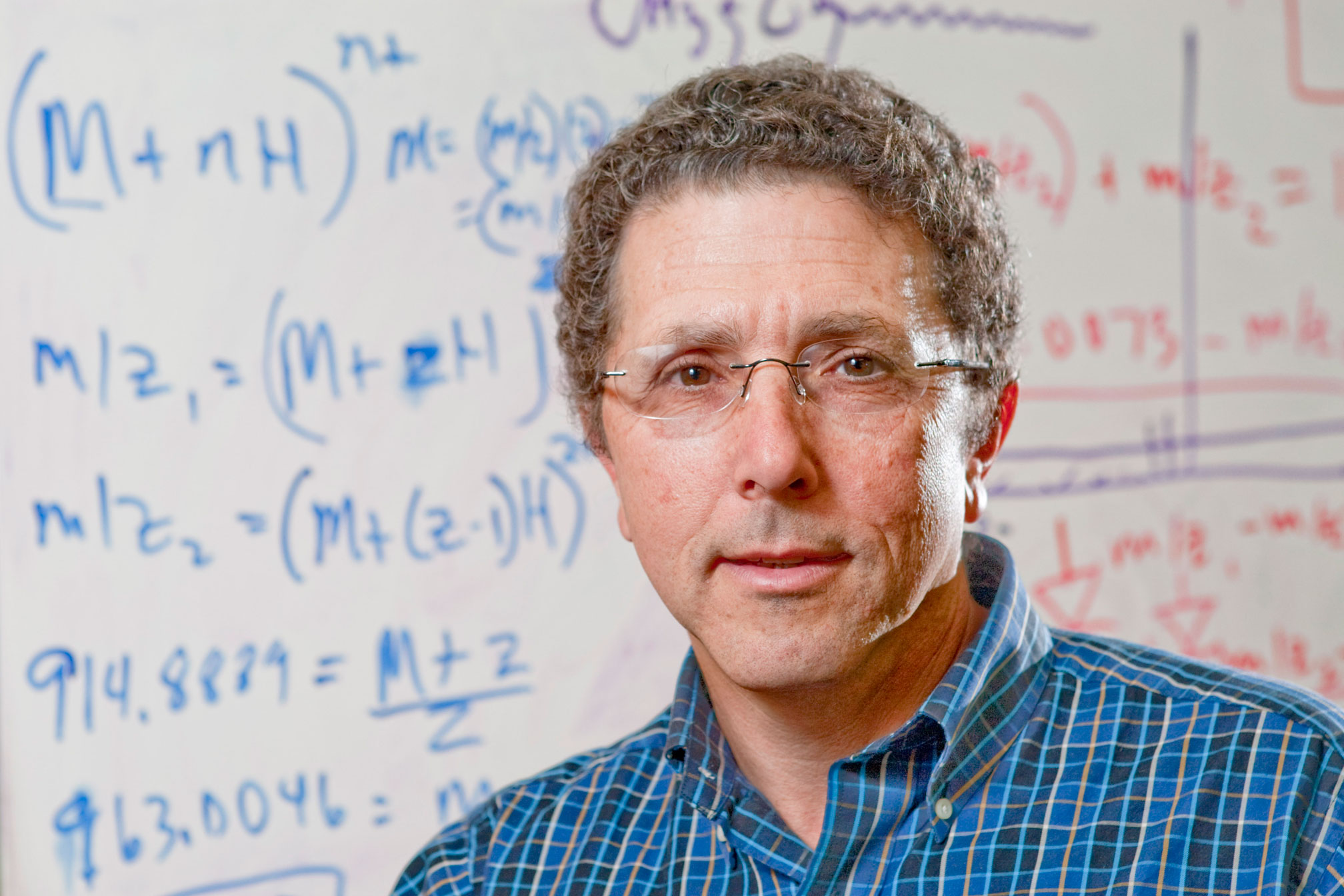
“Having a facility on campus so that researchers can walk just a few minutes from their lab to talk to the person who’s running their sample, and then be able to look at results and decide what they ought to do differently—that will make a tremendous difference,” said Jon Amster, principal investigator on the NIH High-End Instrumentation grant and head of UGA’s chemistry department.
“We’re going to be getting the next generation instrument, which is vastly better—much more sensitive. This kind of resource is indispensable,” said Edward Kipreos, professor of cellular biology.
Kipreos’ research uses mass spectrometry to determine protein substrates as they relate to the cell cycle, with possible applications in cancer research.
NIH also awarded UGA a $363,700 grant for a new electronics console for the 800 MHz nuclear magnetic resonance spectrometer housed in the Fred C. Davison Life Sciences Complex. The more reliable console will further research in protein chemistry, cellular communication, medical imaging and other areas. Like mass spectrometry, NMR spectroscopy gives researchers insight into the physical and chemical properties of samples.
“Not only is it replacing an existing instrument, but its capabilities are significantly enhanced,” said Jeffrey Urbauer, associate professor of chemistry and principal investigator on the grant.
Researchers will share $1.2 million in grants from NIH
Urbauer’s research group uses the 800 MHz NMR to examine the structure and stability of protein molecules. He is particularly interested in studying the estrogen receptor, the primary chemotherapeutic target for breast cancer.
“This works by leapfrogging. A campus will win one of these awards, set up a first-rate, world-leading instrumentation facility and everybody from around the country, and especially the region, will end up using it,” said Robert Scott, associate vice president for research. “These awards are a major leap forward for UGA.”

More from this issue
-
October 3, 2011
Role models
Four UGA faculty members—Steve Oliver, Jay Rojewski, Peter Smagorinsky and Sally Zepeda—have been named the College of Education’s inaugural Distinguished Research Mentors for the 2011-2012 academic year. Continue
-
October 3, 2011
Search committee seeks dean for arts and sciences
Provost Jere Morehead has appointed a committee to begin a national search to fill the position of dean of the Franklin College of Arts and Sciences. Continue
-
October 3, 2011
Branching out
Shelley Cannady wants help. For years now the assistant professor in College of Environment and Design has been growing grapes for the North Georgia wine market. Continue
-
October 3, 2011
Obituary, Linda Brooks
Linda Marie Brooks, an associate professor in the department of comparative literature, died June 7 at the Duke University Medical Center. Continue
-
October 3, 2011
Online encyclopedia to celebrate first billion hits with symposium
DiscoverLife.org, an online interactive encyclopedia created by John Pickering, an associate professor in the Odum School of Ecology, will reach its first billion hits this fall. Continue
-
October 3, 2011
Alumna receives MacArthur Foundation’s ‘genius award’
A.E. (Alicia) Stallings, who graduated from UGA in 1990, has been selected as a 2011 MacArthur Fellow by the John D. and Catherine T. MacArthur Foundation. Stallings is one of 22 receiving the fellowship this year. Continue
-
October 3, 2011
Body of work: Prof consults as forensic anthropologist on cold cases with GBI
MariaTeresa Tersigni-Tarrant’s job is not for the faint of heart. As a forensic anthropologist, she helps solve cases with a decomposing body or skeletal remains and examines the manner—not the cause—of death. Continue
-
October 3, 2011
Research team receives grant to develop software
A team of UGA researchers has been awarded a $500,000 small business grant from the National Institute of Mental Health to develop interactive educational software aimed at teaching high school students how the five senses work in the context of the brain and how neurons work. Continue
-
October 3, 2011
Political columnist joins Grady faculty as visiting professor
Cynthia Tucker, Pulitzer-Prize winning columnist for the Atlanta Journal-Constitution, has joined the Grady College of Journalism and Mass Communication as a visiting professor as part of a multi-year partnership between UGA and the newspaper. Continue
-
October 3, 2011
Stream lined
A long-term study investigating how altering nutrient inputs to streams affects forest-dwelling organisms has yielded surprising results. Continue
-
October 3, 2011
Student interns exhibit designs they created for Archway communities
On Aug. 25, UGA students, faculty members and administrators gathered in the Tanner Building to view an exhibit by student interns who spent the summer creating landscape designs for Archway Partnership communities. Continue